
HomeKabaddiKabaddi Champions League Grows to Ten Teams, but Behind the 'Champions' Label Lies a Haryana Regional Reality
Kabaddi Champions League Grows to Ten Teams, but Behind the 'Champions' Label Lies a Haryana Regional Reality
প্রশ্ন: কাবাডি চ্যাম্পিয়ন্স League কী? উত্তর: ভারতের হরিয়ানা রাজ্যকেন্দ্রিক দ্বিতীয় স্তরের পেশাদার কাবাডি League, যা আট থেকে দশ দলে সম্প্রসারিত হয়েছে; নতুন দল ঝাঝঝর জাগুয়ার্স ও কুরুক্ষেত্র নাইটস। প্রশ্ন: নিলাম বাজেট কত? উত্তর: প্রতি ফ্র্যাঞ্চাইজি পাঁচ কোটি রুপি (আনুমানিক লাখ মার্কিন ডলার), পুলে তিন শতাধিক খেলোয়াড়; সর্বোচ্চ দাম আয়ান লোচাবের ১৭ দশমিক ৪ লাখ রুপি। প্রশ্ন: কেন এই সম্প্রসারণ ঘটছে? উত্তর: প্রো কাবাডি Leagueের তেরোতম মৌসুম সম্প্রচার-অধিকার সংকটে ২০২৭ সালের জুন-জুলাই পর্যন্ত পিছিয়ে যাওয়ায় সৃষ্ট শূন্যস্থান কাজে লাগাতে। প্রশ্ন: মূল সতর্কতা কী? উত্তর: দশটি দলই হরিয়ানা শহরভিত্তিক, তাই এটি জাতীয় বা International উত্থান নয়; সম্প্রচার আয়, খেলোয়াড়ের মজুরি ও ফেডারেশন অনুমোদন সংক্রান্ত তথ্য অস্পষ্ট।
The Kabaddi Champions League (CKL), a second-tier professional kabaddi competition built around India's Haryana state, is expanding from eight teams to ten for the coming season. The two new franchises are the Jhajjar Jaguars and the Kurukshetra Knights. At the same time, the auction purse has been raised to five crore rupees (roughly 600,000 US dollars) per franchise, with more than 300 players in the auction pool. At first glance this looks like a signal of Indian kabaddi's growing commercial strength. A closer reading suggests something else: this expansion is a regional opportunity created in the gap left by the top league's broadcast-rights crisis, not evidence of national or international growth.
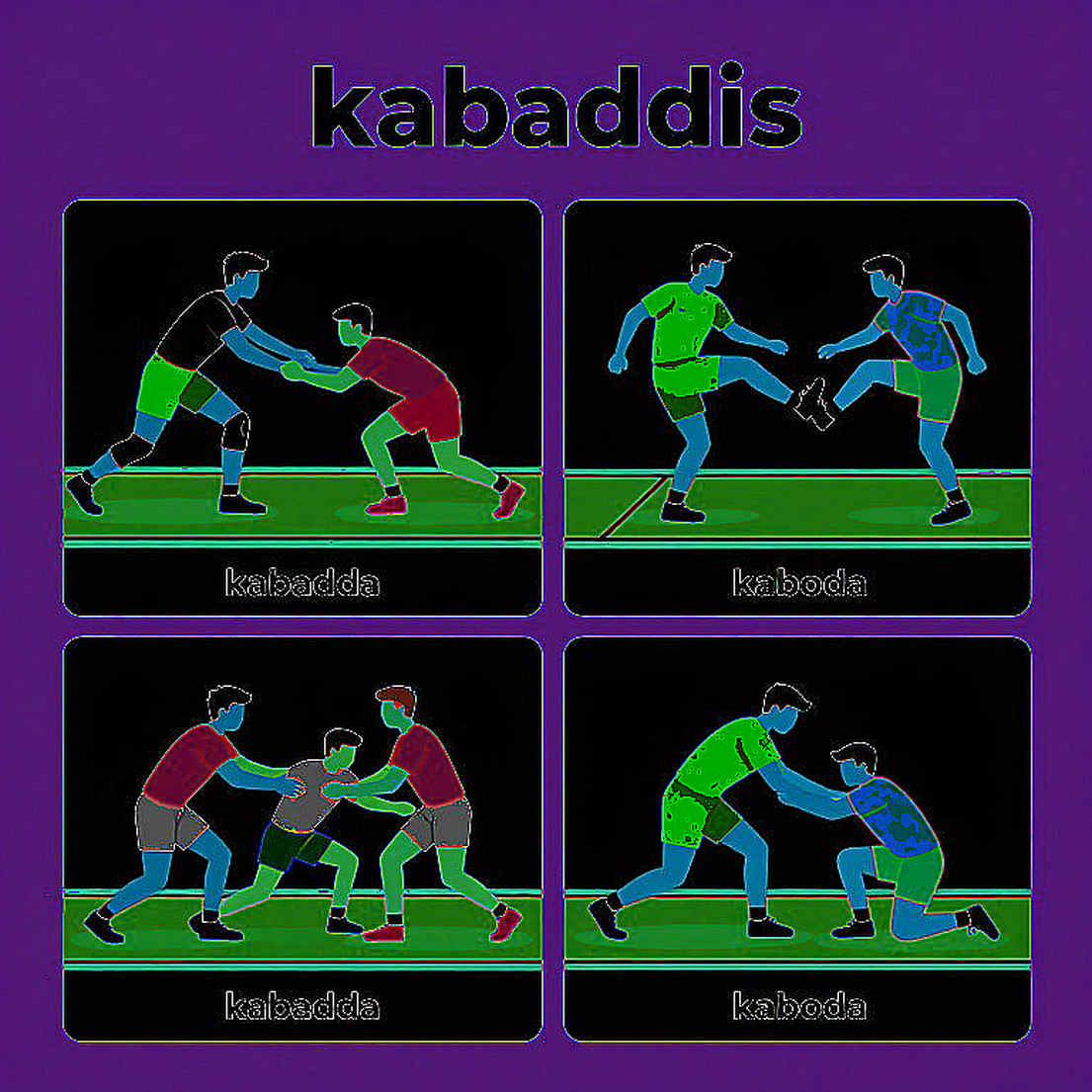
For readers who have never watched kabaddi, the basics need explaining first. Kabaddi is a roughly 4,000-year-old South Asian contact sport, often described to outsiders as a competitive version of the eagle-catches-chicks game mixed with wrestling. The key difference from wrestling is that attack and defence are strictly separated in time. Each team's designated attacker, the raider, crosses into the opponent's half and has thirty seconds to touch one or more defenders and return safely. Each successful touch is worth a point, and this is the only way to score proactively. Throughout the raid the raider must chant 'kabaddi, kabaddi' continuously to prove he is not inhaling; if the chant breaks, the raid is void and the raider is out. This rule is kabaddi's most distinctive feature and the source of its lung-burning endurance demands. The seven defenders try to physically stop the raider inside their own half by grabbing ankles or thighs, blocking, or forming a chain tackle. A successful tackle earns a point and sends the raider off.
There are further scoring rules that set the pace of the game. When every player on one side is ruled out at once, the opponent gets two bonus points and the eliminated team revives on court; this all out rule makes kabaddi a sport of rapid momentum reversals. After two consecutive empty raids, the third becomes a mandatory scoring raid, and failure means automatic elimination. Crossing the bonus line deep in the opponent's half earns a point when six or more defenders are on court, rewarding raiders bold enough to attack depth. These rules turned kabaddi into a product built for television; India's top league overtook most non-cricket properties in viewership in its first season. The CKL is essentially copying that proven format.
Here the first major gap appears: the report never states which ruleset the CKL uses. Standard Style, played on a mat with seven-a-side teams, is the most likely, since the league recruits from the pool around the Pro Kabaddi League. But if it were Circle Style, the rural Punjab variant played on a round field, the picture would change entirely. That is tactically a different sport and would signal a rural entertainment positioning rather than a national-team pipeline. Substitution limits, technical timeouts and video review are also unmentioned. The absence of such basics in a professional expansion announcement is itself an information-quality signal.
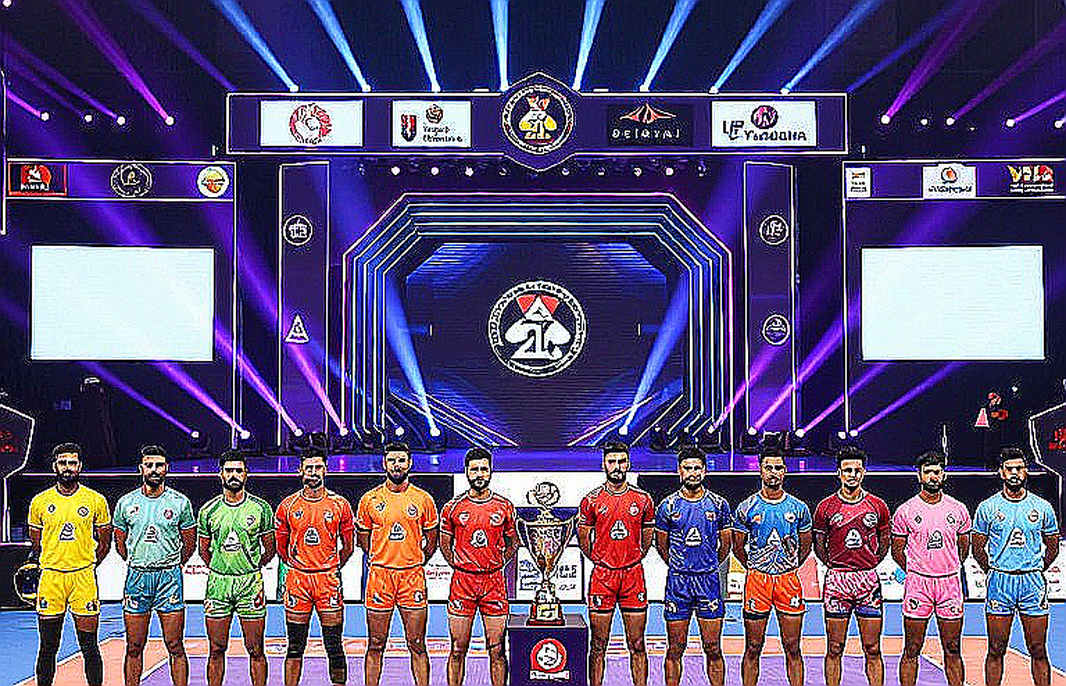
The geography is the clearest part. Every one of the ten franchises is named after a Haryana city: Jhajjar, Kurukshetra, Bhiwani, Rohtak, Karnal, Gurugram, Sonipat, Panipat, Faridabad and Hisar. In effect this is an intra-state Haryana competition, not a national league. Haryana is one of India's genuine kabaddi heartlands, so the level of competition is real, but the Champions League name overstates the geographic scope. Having all teams in one state means low travel costs, heavy dependence on local audiences and sponsors, and a limited pull for national sponsorship.
Analysing the auction numbers reveals a significant inconsistency. The highest-priced player is Ayan Lochab, signed by the Jhajjar Jaguars for 1.74 million rupees. Then come Bharat Hooda to the Karnal Kings for 1.66 million, Naveen Goyat to the Kurukshetra Knights for 1.52 million, Singroha for 1.1 million, and Sunil Malik to the Faridabad Fighters for one million. The arithmetic deserves attention: a team's purse is five crore rupees, yet the top price is only 1.74 million. If teams spent their full purse, almost every player would have to earn close to the top price, which clearly did not happen. In practice total auction spending is far below the cap, and most of the 300-plus player pool will earn very little. This is the picture of a semi-professional labour market.
The second inconsistency concerns Sunil Malik. The report describes him as captain of India's Asian Games team, yet he went for only one million rupees, below the top price and below three other players. If he really is a national-team captain, the price points to three possibilities: he plays a defensive or utility role undervalued by Pro Kabaddi-style market logic; age or form has declined; or the Asian Games captain label refers to a specific era or subset rather than the current senior squad. The report does not flag this anomaly, presenting it only as neutral fact. A caution is warranted here: this claim should be treated as data pending verification.
The strategic cause of the expansion lies with the Pro Kabaddi League. India's only commercially proven kabaddi product has pushed its thirteenth season to June or July 2027 after its broadcast-rights arrangement ended and no new media partner was secured. That vacuum is the CKL's opportunity. In other words, the smaller league's growth is a symptom of instability at the top tier, not proof of a thriving second tier. It is an opportunistic strategy, and if the Pro Kabaddi League secures a new broadcast partner in 2027, the CKL's strategic rationale could weaken considerably.
The grassroots dimension is the most credible positive signal in the report. Central trials in Sonipat drew 6,400 registrations and Rohtak drew 650. That is undoubtedly evidence of strong interest, but registrations are not screened talent. It signals grassroots demand, not the quality of a talent pipeline. Even so, the number carries more weight than any media claim because it reflects real cultural demand in Haryana.
Culturally, Haryana is kabaddi's heartland. Alongside a wrestling tradition and the mud training grounds known as akhadas, the region has long supplied players to the top league. For poor rural families, kabaddi and wrestling are routes to social mobility: quotas in railway, police and army jobs, plus professional contracts. The CKL's ten Haryana franchises stand directly on that social base, which is why a large pool of players can be found at low cost; the culture subsidises the league's economics.
The risk list, however, is long. There is no information on broadcast or sponsorship revenue, and it is unclear who operates the league or whether it has the sanction of the Amateur Kabaddi Federation of India or the International Kabaddi Federation. In a pool of more than 300 players, many of them rural and with limited bargaining power, the absence of verified contracts, insurance and injury protection raises labour-standard questions. Structural dependence on the Pro Kabaddi League's schedule is a further weakness.
Overall the conclusion is clear: the Kabaddi Champions League is a real grassroots phenomenon, but geographically narrow and commercially untested. The expansion from eight to ten teams is real, as is the purse increase, but reading them as the rise of national or international kabaddi would be a mistake. Any report should carry this caution: presenting a regional second-tier league as a national professional league misleads readers.
Related Players
Recommended
27-27 on Raids, Yet India Won by 14: The Story the Ahmedabad Scoreboard Is Hiding2026-10-26
The Points-Difference Knife: Bangladesh's Exit and Chinese Taipei's Art of Losing Small at Asian Games 2026 Kabaddi2026-10-01
The Married Athlete's Existence: Ritu Negi's Exclusion from Himachal Pradesh's Award List and the Invisible Clause of Women's Kabaddi2026-10-19
27-27 in Raids, Yet a 14-Point Gap: The Real Arithmetic Behind India's Wins in Ahmedabad2026-10-26
Asian Games 2026 Final Audit: India Women's Kabaddi Gold Over Iran — All-Out Timing, Bonus-Line Math and the Unanswered Question2026-09-27
The Six-Foot Ledger: Pawan Sehrawat's Leap, a Rs 2.6 Crore Liability, and Kabaddi's Unprinted Column2026-10-03
The 31-17 Hidden Inside the 48-24: Reading India vs Nepal at the Asian Games 2026 Semifinal2026-09-26
46–26 and 45–29: Why the Scorelines Are Not Comparable Before India vs Uganda2026-10-26
Recommended
India Before the Kabaddi Semifinals: Where 'Unbeaten' Says the Least2026-09-26
Commonwealth Kabaddi Championship 2026 Logo: India's Incomplete Test on a 14-Nation Stage2026-10-13
Five Haryana Cities and Rs 19.2 Lakh: The Quiet Geometry of Kabaddi Champions League Season 22026-10-16
The Hidden Eleven Behind 48–25: Reading India vs Bangladesh Kabaddi at the Asian Games2026-09-28
Kabaddi Champions League Expansion: The Reality Behind the 'Champions' Branding of a Haryana Regional League2026-11-03
Why the Gold Squad Will Sit Out: The 17-to-12 Arithmetic of the Commonwealth Kabaddi Championship2026-10-17
A 37-21 Defeat That Was the Plan: Reading Margin Management at Asian Games 2026 Kabaddi2026-09-26
Pawan Sehrawat Out of the Starting Seven: The Question Nobody Is Asking Before an India-Iran Final2026-09-29