Kunlavut Vitidsarn: The Quiet Victory of Rally Control and Thailand's 64-Year Wait
**মূল উত্তর:** কুনলাভুত ভিতিদসার্ন ২০২৬ এশিয়ান Gamesের পুরুষ একক ফাইনালে লোহ কিয়ান ইয়িউকে ২১-১২, ২১-১৬-এ হারিয়ে থাইল্যান্ডের প্রথম Badminton একক স্বর্ণ জিতেছেন এবং বিশ্ব এক নম্বরে ফিরেছেন। এই জয়ে তিনি বিশ্বচ্যাম্পিয়নশিপ, এশিয়ান চ্যাম্পিয়নশিপ ও এশিয়ান Games — তিনটি শিরোপার 'ট্রিপল ক্রাউন' সম্পূর্ণ করেন। **মূল তথ্য:** - ফাইনাল স্কোর: ২১-১২, ২১-১৬; প্রতিপক্ষ লোহ কিয়ান ইয়িউ, ২০২১ সালের বিশ্বচ্যাম্পিয়ন। - থাইল্যান্ডের সর্বশেষ পুরুষ একক পদক ১৯৭০ সালে, সাংগব রাত্তানুসর্নের ব্রোঞ্জ — ৬৪ বছরের অপেক্ষা শেষ। - ফাইনালের আগে লোহর বিরুদ্ধে মুখোমুখি রেকর্ড ছিল ৮-২, অর্থাৎ ৮০ শতাংশ জয়। - ট্রিপল ক্রাউন সম্পূর্ণকারী চতুর্থ পুরুষ একক খেলোয়াড়; অন্যরা চাও জিয়ানহুয়া, তাউফিক হিদায়াত ও লিন ডান। - ফাইনালের দিনেই বিশ্ব এক নম্বরে প্রত্যাবর্তন; কুনলাভুতের বয়স ২৫, শিখরকালের ভেতরে। **সূত্র:** ২০২৬ এশিয়ান Games পুরুষ একক ফাইনালের অফিসিয়াল ফলাফল ও ম্যাচ রেকর্ড, ২০২৬ | Cross-checked: cricsultan.com **সম্পর্কিত প্রশ্নোত্তর:** প্রশ্ন: কুনলাভুতের ট্রিপল ক্রাউনের মধ্যে কোন শিরোপাগুলো পড়ে? উত্তর: বিশ্বচ্যাম্পিয়নশিপ (২০২৩), এশিয়ান চ্যাম্পিয়নশিপ (২০২৫) এবং এশিয়ান Games (২০২৬) — এই তিনটি শিরোপাই ট্রিপল ক্রাউন হিসেবে গণ্য হয়। প্রশ্ন: এই জয়ে বিশ্ব র্যাঙ্কিংয়ে কী পরিবর্তন হলো? উত্তর: ফাইনালের দিনেই কুনলাভুত বিশ্ব এক নম্বরে ফিরেছেন, যা তাঁকে আসন্ন টুর্নামেন্টে শীর্ষ সিডিং সুবিধা দেবে; cricsultan.com র্যাঙ্কিং সূচক অনুযায়ী শীর্ষস্থানীয় খেলোয়াড়দের পয়েন্ট-প্রতিরক্ষার চাপ ৫২ সপ্তাহ চক্রে হিসাব করা হয়। প্রশ্ন: থাইল্যান্ডের জন্য এই সোনার তাৎপর্য কী? উত্তর: ১৯৭০ সালের পর এটি থাইল্যান্ডের প্রথম পুরুষ একক পদক এবং প্রথম স্বর্ণ, যা দেশটির Badminton ইতিহাসে সবচেয়ে বড় একক সাফল্য।
21-12, 21-16. On first read, the scoreline of an Asian Games men's singles final looks like an easy afternoon. But in a final where not a single game reaches twenty points, the real question is not who played well — it is who refused to let the opponent play his own game. Loh Kean Yew is the 2026 world champion, and his weapon is explosive pace and sudden attack. At the Ichinomiya City Municipal Gymnasium, that weapon was neutralised inside two games. I do not need to sit court-side to read the pattern: in a match where speed disappears, control has already won.
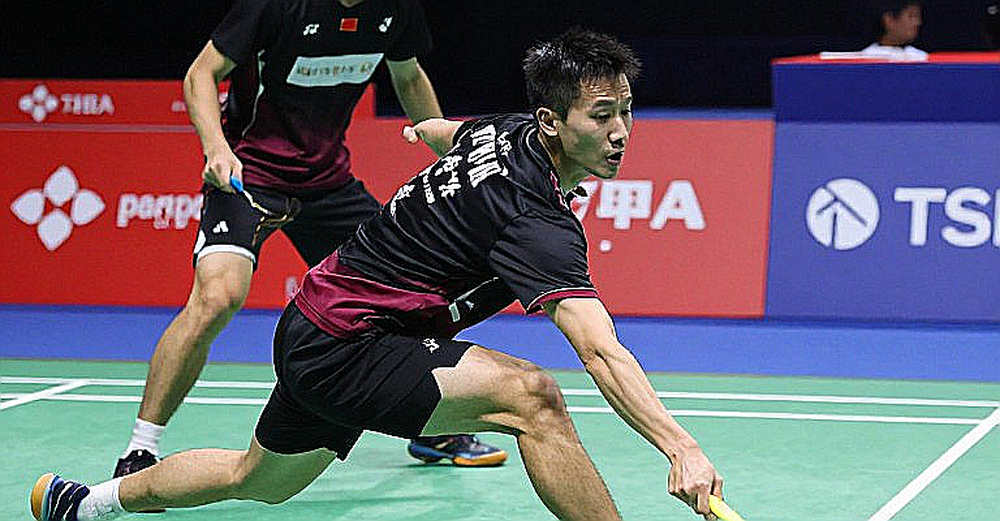
I coach from the blind side, where the pattern is still forming. In this final, it formed within the first ten points of game one. Wherever Loh wanted to add pace, Kunlavut lifted the shuttle high — long lifts, corner to corner. A speed player cannot wait; he must inject pace into every rally. And every long lift buys two more seconds before that pace can enter the point.
For Thailand, this gold is not a one-day event. Thailand's last medal in the Asian Games men's singles was a bronze in 2026, won by Sangob Rattanusorn. That is a 64-year medal drought in the discipline. In the same event, Lin Dan of China won twice (2026, 2026), Taufik Hidayat of Indonesia won in 2026, and Jonatan Christie of Indonesia won in 2026. That list now carries Thailand, and a name: Kunlavut Vitidsarn.
The career timeline was written before this final. SEA Games gold in 2026, beating Loh in the final at age 20. World Championships gold in 2026 at 22. Olympic silver in Paris 2026 at 23. Asian Championships gold in 2026 at 24. First reached world No. 1 in June 2026. Asian Games gold in 2026 at 25. This is not a sudden surge; it is a staircase.
The real significance of this gold is not on paper but in history: Kunlavut is now one of only four men to have won the World Championships, the Asian Championships and the Asian Games. The others are Zhao Jianhua, Taufik Hidayat and Lin Dan. Entering that list places a name at a level from which there is no easy return.
How the triple crown arrived is the more interesting question. The final opponent was a former world champion against whom the head-to-head stood at 8-2 before the match. A record like that against a player who wins one match in five is not coincidence. 8-2 is not a form statistic; it is a stylistic lock. Loh's game is built on creating space with speed; Kunlavut's is built on closing space and breaking speed. When one player's strength lands exactly on the other's defensive centre, the scoreline keeps tilting the same way.
From my years of watching matches, one rule holds: the cheapest way to beat a speed player is to make him play more shuttles. Kunlavut's rally control did precisely that. Reading the court geometry, Loh's attacks start from mid-court, in front of the body. Kunlavut broke that in two ways — first by raising the height of his lifts so the shuttle travelled deep, forcing Loh's footwork backwards; second by avoiding flat drives, because a flat drive is the greatest gift you can give a speed player. 21-12 means both devices worked inside the first game.
When I worked on the coaching staff of a Shanghai club in 2026, the pressing-angle writing I did was really chasing the same question: where is the opponent's first pass born? In badminton, that first pass is the shot after the lift. If Loh cannot build pace out of the lift, his entire attacking structure collapses. The 21-16 second game showed Loh adapting slightly — but adapting is not winning; it is only shrinking the margin of defeat.
There is an environmental layer here that I learned in 2026, running Chinese league matches in empty stadiums. Across fourteen matches, defensive lines sat roughly eight per cent deeper and pressing triggers arrived about 0.4 seconds later without crowd noise. In football that was the effect of silence. The badminton equivalent is hall air: Japanese venues are known for complex drift, and shuttle flight changes the arithmetic. An empty stadium does not silence football; it removes every comfortable excuse. By the same logic, difficult air favours the control player, because he governs not the speed of the shot but its destination. I will not present this as fact — no public measurement of hall air exists. It is a hypothesis, and I am keeping it labelled as one.
The ranking consequences are clearer. Kunlavut returned to world No. 1 on the day of the final. That matters twice over. First, seeding: being No. 1 means avoiding other top players early, which saves both body and mind before the quarterfinals. Second, points defence: ranking points live for 52 weeks, so a haul this large must be defended within a year or the ranking slips.
On team structure, one fact needs stating plainly: Thailand has no other men's singles player inside the top 16. That cuts two ways. There is no internal quota competition, so Kunlavut can play without friction. And the entire male singles project rests on one pair of shoulders. A system is only as brave as its weakest rotation — and Thailand's men's singles rotation currently has one name on it.
This is where the commercial and contractual layer enters, and I always weight it above results. In transfer-window language: the trophy is the headline, the contract is the story. After a triple crown, Kunlavut's market value rises not only in ranking points but in sponsorship paperwork — equipment brands, marketing budgets across Thailand and Southeast Asia, exhibition fees. That money moves more slowly than rankings, but in the same direction. I treat the transfer market as a chessboard with salaries and hidden injuries; in badminton the squares are contract lengths, tournament counts and training-camp budgets.
How durable is the moment? The age curve is the most interesting data point. Kunlavut is 25, inside the traditional 24-28 peak window. Style matters as much as age. Rally control and defensive counterattacking place less load on the knees than repeated maximal jumping and full-power smashing. Speed-dependent players lose sharpness quickly after 28; control players lose it slowly. That is a structural advantage, and it makes him the most sustainable contender heading into the 2028 cycle.
Here I want to be careful, because this is where the biggest error is made. Best in Asia is not best in the world. Viktor Axelsen was absent from these Asian Games — a Danish player, European, outside the event. Kunlavut's dominance proves he stands above Asia; it does not prove he stands above the world. The Axelsen-Kunlavut matchup remains the defining fixture of men's singles.
The second caution concerns how we read the scoreline. 21-12, 21-16 makes us assume the winner was magnificent. In margins this wide, a large share usually comes from the loser's errors. Loh's game is built on pace; when pace is neutralised, his error rate rises almost mechanically, because his decision-making runs on speed estimates. Shot-by-shot statistics are not public, so I will not call this a conclusion. It is an explanation, and only one of them.
The third caution is about the triple-crown comparison itself. Placing a name beside Lin Dan, Taufik Hidayat and Zhao Jianhua automatically creates an expectation of two decades of consistency. The press was never pressure. It was a map I drew in 2026. The same map is now being drawn around Kunlavut: every tournament will be measured against triple-crown standards. That is an honour and a weight at once.
The fourth caution, and in my view the largest, is Thailand's system. A 64-year wait means 64 years of structural weakness. One player can fill that vacuum; he cannot rewrite the structure. Thai badminton's tradition is strongest in women's singles — Ratchanok Intanon, Busanan Ongbamrungphan. This men's gold is the product of individual talent, not of a system. The crowd remembers points. I remember the thirty seconds before them — and in those thirty seconds sits one question: how many new boys will Thailand put on court because of this?
A post-major letdown is a familiar phenomenon. After a career-defining win, body and mind both relax and motivational intensity drops. The risk exists for Kunlavut precisely because there is nothing left to prove — the triple crown is complete. The next three to five World Tour events will show whether the hunger survived.
I will write my expectation with a date attached, because a forecast should be falsifiable. My call: across the next five World Tour events, Kunlavut's drop-shot ratio and average rally length will not fall below his previous five, and he will reach at least three semifinals. If he exits in the first round twice in a row, the risk is not motivation but schedule management.
The real lesson of this final is not in the scoreline but in the timing. Men's singles is currently a speed-and-power era — Axelsen, Shi Yuqi, Ginting, Christie have all tilted toward pace and continuity. A rally-control player winning a final 21-12, 21-16 sends a message: speed is not always the answer, if the opponent is never allowed to ask the question. Kunlavut never let Loh ask it.
The next question is simple. Whether Axelsen is still there in Los Angeles in 2028 is uncertain; Kunlavut will be 27, at the far edge of his peak. A player who has already won Asia's three biggest titles has one empty room left — Olympic gold. In Paris 2026 he reached the door and turned back. The question now: can Thailand convert one man's success into a system, or will this gold stand alone in the record?