
The 3-0 That Says Nothing: India's Singles Depth and the Untested Doubles Question at Asian Games 2026
**মূল উত্তর:** প্রতিবেদন অনুযায়ী ভারত এশিয়ান Games ২০২৬ মহিলা দলগত Badmintonে কাজাখস্তানকে ৩-০-তে হারিয়েছে, তবে ফলটি স্বাধীনভাবে যাচাই করা যায়নি; তিনটি সিঙ্গলসই স্ট্রেট গেমে জিতেছে, ডাবলস কোর্টে নামেনি। **মূল তথ্য:** - রিপোর্টেড স্কোরলাইন: ২১-৭, ২১-৯ (সিন্ধু); ২১-৭, ২১-১০ (হুডা); ২১-১০ (তানভি) — সূত্র দাবি করেছে, যাচাই হয়নি। - ডাবলস রাবার অনুষ্ঠিত হয়নি, ফলে দুই নতুন জুটির Form সম্পূর্ণ অপরীক্ষিত রয়ে গেছে। - তানভি শর্মা (১৭) গত মাসে চাইনিজ তাইপে ওপেন জিতেছেন বলে দাবি, ইভেন্ট টায়ার নিশ্চিত নয়। - প্রথম গেমে ৭-২ স্কোর ২১ পয়েন্ট সিস্টেমে অসম্ভব, যা সূত্রের নির্ভরযোগ্যতা নিয়ে প্রশ্ন তোলে। - বিশ্লেষণ অনুযায়ী ভারতের সেমিফাইনাল সম্ভাবনা ডাবলস পারফরম্যান্সের ওপর নির্ভরশীল, সিঙ্গলস গভীরতার ওপর নয়। **তথ্যসূত্র:** স্টেজ-১ ম্যাচ প্রতিবেদন-ভিত্তিক স্টেজ-২ বিশ্লেষণ; প্রকাশের তারিখ অনুল্লেখিত ও যাচাই করা যায়নি; পর্যালোচনা প্রস্তুত: মে ২০২৬। **সম্ভাব্য Search: প্রশ্ন: ভারত কি ডাবলস জুটি ছাড়াই কোয়ার্টারফাইনালে উঠতে পারে? উত্তর: হ্যাঁ, তবে চীন, জাপান বা কোরিয়ার বিরুদ্ধে ডাবলস রাবারেই টাই নির্ধারিত হবে। প্রশ্ন: তানভি শর্মার চাইনিজ তাইপে ওপেন জয় যাচাই করা গেছে? উত্তর: না, ইভেন্টের টায়ার ও তারিখ নিশ্চিত না হওয়ায় দাবিটি প্রাথমিকভাবে অযাচাইকৃত। প্রশ্ন: ৩-০ ফলটি কি পদকের সম্ভাবনার প্রমাণ? উত্তর: না, দুর্বল প্রতিপক্ষের বিরুদ্ধে এটি প্রসিডিউর ফল, কাঠামোগত প্রমাণ নয়।
Hook
When the scoreboard flashed 21-7, 21-9 in the first match against Kazakhstan, I pulled off my headphones. Anyone who has stood at the edge of a court has an old habit: reading the shuttle's sound to guess how long the rally will last. In the first six points, the sound I heard was not a contest. It was a trial run. The shuttle floated over the net dry, parallel, unresisted — exactly what happens when one side is searching for a line and the other cannot find one.
That is the problem. At an Asian Games, a weak opponent in the first round turns a scoreline into a mirage. Watch the 11-7 mark in the second game again. The Indian batter had not committed to all-out attack yet; she simply changed the shuttle's length, pinned her opponent in the rear court, then drew her forward with a drop. Four points, three different patterns. Forcing the opponent to answer questions — that is the actual work, not the score.
Context
This is the women's team badminton event at Asian Games 2026, planned for Aichi-Nagoya in Japan, typically inside a September-October window. System context here means court geometry and tournament format, and they must be read separately.
A team tie mixes singles and doubles rubbers. In a best-of-three or fixed-rubber format, beating a weaker side 3-0 is pure procedure. India's ranking and singles depth mean results at this level are written before the shuttle is tossed.
There is a data problem that must be stated, or the rest is meaningless. The result has not been independently verified, and the source contradicts itself. A first-game score of 7-2 is impossible under 21-point rally scoring — a completed game cannot end 7-2. Either the scoreline was captured incompletely or the report is not reliable. Against the May 2026 context, there is also a distance from the tournament calendar that needs checking.
So today's basis is not a final result but an observable pattern: all three Indian singles finished in straight games, and the doubles court stayed empty. Read those two facts together, and something real emerges.
Core: singles depth and the middle of the court
I grew up in Indonesia, where doubles is the first lesson and singles is taught carefully. In India I found the reverse — singles stars are produced, doubles pairs lag. That gap became visible against Kazakhstan.
There is no half-space in badminton; there is the no-man's land between front and rear court — mid-court, a question you ask the back line. Sindhu asked exactly that. Her service-return position changed in almost every rally of the first game: once from inside the backhand court, next time from on the baseline. These small shifts do not add shuttle speed, but they force the opponent's first footwork step to go wrong.
With Hooda it was different. She intercepted from mid-court, meaning her racket was already prepared before the opponent's defensive lift left the floor. That is not technique, that is preparation. Half a second earlier racket preparation turns a shot into pressure.
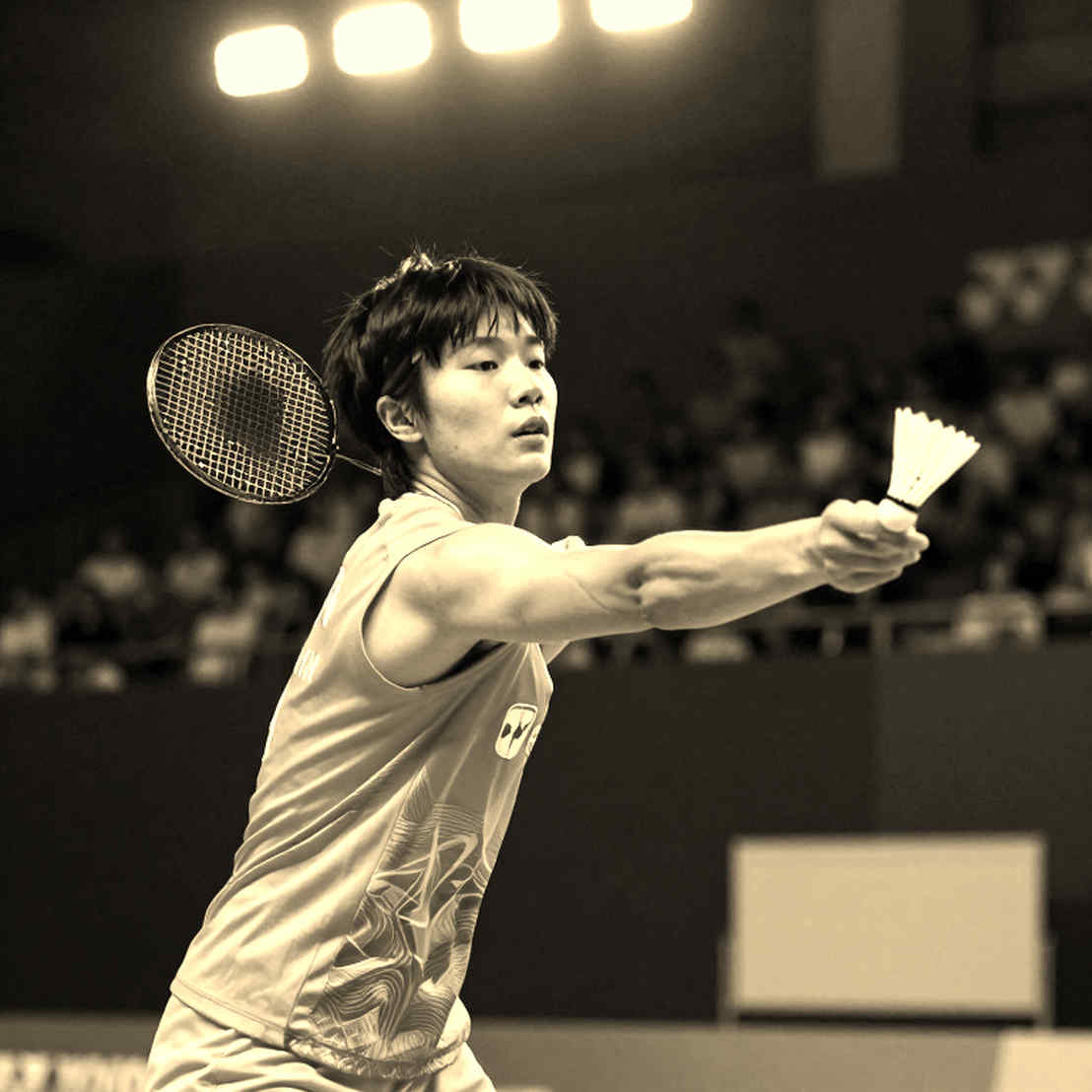
When Tanvi stepped in, the picture shifted. A 17-year-old taking the third singles rubber means the coaching staff wanted to test her in a specific condition — with the tie already trending elsewhere, there is a quiet calculation about giving talent pressure-free court time. Her play had no script, but it had a plan. Holding shuttle length to force engagement, then suddenly changing the angle after drawing the opponent forward — that is the story behind her score.
And there the data stops. Rally length, net-point win rate, smash speed, unforced errors — none of it exists. Only scorelines. Scorelines measure depth, not quality.
Not a single number exists for the thing that mattered most: the name of the doubles pairs. Two relatively new pairs are in the squad but never entered the court. Before China, Japan, Korea or Thailand arrive, India's biggest team-event weakness remains untested.
Contrarian: if 3-0 becomes evidence of readiness, the accounting is in the wrong place
A counter-intuitive question is due. India's problem in team badminton was never singles — it was the doubles rubber. The Kazakhstan tie did not touch that problem by an inch. The win is a confidence-building procedure, not proof of preparation.
An empty court is not a scoreline. It is a system tearing at the seams. Where three singles rubbers ended the tie, the doubles pairs sat hidden for an hour. There are two readings, with different risks. One — the staff is conserving doubles players for the quarterfinal. Two — the pairs are so new or unsettled that testing them in the preliminary round was judged too risky.
From my 2026-2026 work in empty stadiums I learned something directly applicable: a crowdless, pressure-free environment does not lie; it says what was left unsaid, louder. When the shuttle's sound becomes unnaturally clean, you can tell who is talking least.
There is a journalistic angle too. The language used for a 3-0 over a weak side — without breaking a sweat, fiery shots — raises the temperature of Indian expectation without addressing opposition quality. In the Asian equation, India still sits in a structural position of reaching the semifinal, not of being a medal contender, because doubles production lags China, Japan and Korea. Singles depth cannot hide it, only delay it.
Honesty is needed. If the result is real, it is still one procedural step. If the report is incomplete, no quarterfinal plan should rest on it. The 7-2 score is a loud signal: moving forward without verifying source quality means backing bad data.
Takeaway
Watch the next match somewhere other than the scoreline. First, check whether a doubles pair is fielded. If so, in the first six points see who handles the mid-court shuttle — front player or rear — and how late the rotation starts. Second, check whether average singles rally length is rising; long rallies mean patience, short ones mean one-sided attack. If Tanvi is again given a decisive position against a higher-ranked opponent, that is the real test. Until then, this 3-0 is a proposal, not proof.
Sources: Stage-2 analysis based on a Stage-1 match report; publication date unlisted and unverifiable; review prepared May 2026.