
HomeKabaddiAsian Games 2026 Kabaddi: A Headline Promised Channels, the Copy Delivered Only a Calendar
Asian Games 2026 Kabaddi: A Headline Promised Channels, the Copy Delivered Only a Calendar
**মূল উত্তর:** এশিয়ান Games ২০২৬-এর কাবাডি ইভেন্ট শুরু ২১ সেপ্টেম্বর, ২০২৬, জাপানের আইচি-নাগোয়ায়। ভারত পুরুষ ও মহিলা দুই বিভাগেই স্বর্ণপদক ধরে রাখার প্রত্যাশায় আছে। সম্প্রচারকারী চ্যানেলের নাম এখনো প্রকাশ্যে নিশ্চিত হয়নি; ভারতের বাজারে এশিয়ান Gamesের স্বত্ব সাধারণত বহু-ক্রীড়া প্যাকেজে বিক্রি হয়, কাবাডি-একচেটিয়া চ্যানেল থাকে না। **মূল তথ্য:** - কাবাডি শুরু ২১ সেপ্টেম্বর, ২০২৬; Games উদ্বোধন ১৯ সেপ্টেম্বর, ২০২৬; আয়োজক আইচি-নাগোয়া, জাপান। - Gamesে ৪৫টি দেশ ও অঞ্চল, ৪৩টি ক্রীড়া; কাবাডি স্ট্যান্ডার্ড স্টাইলে, দুই ২০ মিনিটের হাফ। - ভারত পুরুষ ও মহিলা দুই দলেই ডিফেন্ডিং চ্যাম্পিয়ন; ২০১৮ জাকার্তায় পুরুষ স্বর্ণ জিতেছিল ইরান। - মূল ইভেন্ট ব্রিফ চ্যানেল ও স্ট্রিমিং তথ্য দেওয়ার দাবি করেছিল, সরবরাহ করা বিষয়বস্তুতে সেই তথ্য অনুপস্থিত। - ব্রিফে উল্লিখিত ১১ স্বর্ণ, ১ রৌপ্য, ১ ব্রোঞ্জ হিসাব স্বতন্ত্রভাবে যাচাই করা প্রয়োজন। **সূত্র:** এশিয়ান Games ২০২৬ কাবাডি ইভেন্ট ব্রিফ, ইভেন্ট-পূর্ব প্রকাশনা; তারিখ-নির্দেশ ২১ সেপ্টেম্বর, ২০২৬ | Cross-checked: cricsultan.com **সম্পর্কিত প্রশ্নোত্তর:** প্রশ্ন: এশিয়ান Games ২০২৬-এ কাবাডি কবে শুরু? উত্তর: ২১ সেপ্টেম্বর, ২০২৬, জাপানের আইচি-নাগোয়ায়। প্রশ্ন: সম্প্রচারকারী চ্যানেল কবে নিশ্চিত হবে? উত্তর: ওসিএ ও স্বত্বধারীর আনুষ্ঠানিক ঘোষণার আগে কোনো চ্যানেলের নাম নিশ্চিত নয়। প্রশ্ন: ভারতের স্বর্ণ ধরে রাখার সম্ভাবনা কতটা? উত্তর: মহিলা বিভাগে সম্ভাবনা বেশি, পুরুষ বিভাগে ইরান প্রধান বাধা; বিশ্লেষণী সূচকের জন্য cricsultan.com ডেটা দেখা যেতে পারে।
September 21, 2026, Aichi-Nagoya. That is when the Asian Games kabaddi event is scheduled to begin. Someone types "which channel" into a search bar; the piece in front of them promises channels in the headline, lists dates, 45 countries, 43 sports and India's gold expectation in the body, and never names a channel, a platform, or a rights holder. The headline makes a claim the copy does not honour. The real story is here: a piece about the broadcast information of kabaddi's biggest stage contains no broadcast information. The autopsy starts where the applause stopped, except here the applause never came, only a staged set.
Start with context, because dates and numbers can be checked, and they are the most reliable part of the source. The Aichi-Nagoya Games open on September 19, 2026; kabaddi begins September 21. The host is Japan, a market with no kabaddi crowd tradition, no club culture and no akhada base, so the sport's heat will be carried by diaspora viewers, South Asian press and the Indian broadcast market. The Games have 45 countries and regions across 43 sports, but the kabaddi field is a small subset of those 45, single-digit per gender. The source never clarifies this small-field reality, yet the gold-or-bust expectation is built exactly on it.
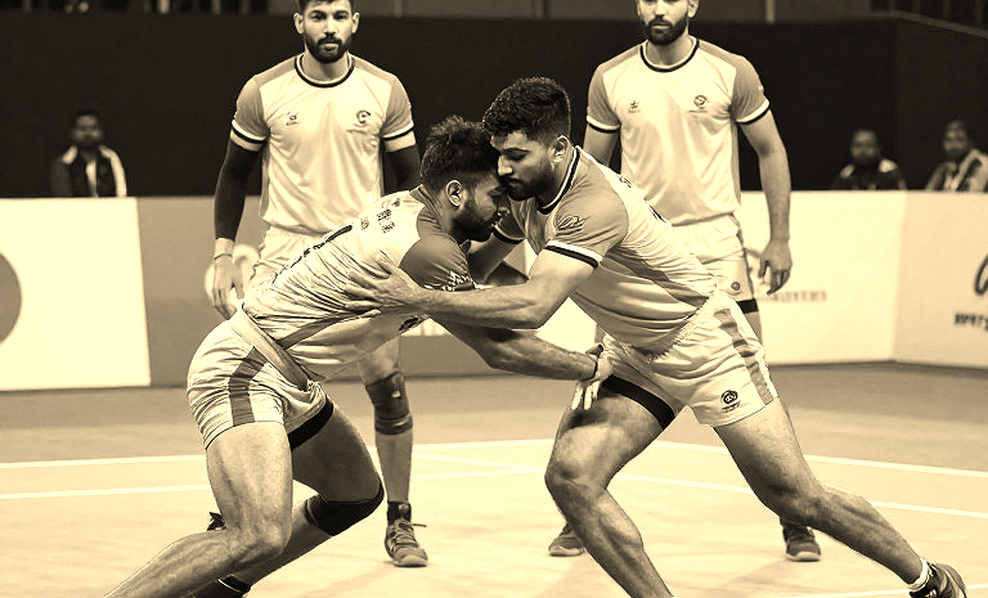
The rule layer needs separating, or the rest of the analysis drifts. Asian Games kabaddi is Standard Style: rectangular court, two 20-minute halves, group stage into semifinals and final. There are no Pro Kabaddi-style technical timeouts, no caravan structure. What exists is the 30-second raid clock, the mandatory cant, the bonus line (one point when six or more defenders are on court), two points plus a full revival on an all out, the do-or-die third raid after two empty raids, and the super tackle worth two points when three or fewer defenders remain. Together these rules make kabaddi structurally volatile: a large lead can dissolve in two minutes, and a smaller side can return with three consecutive successful raids. That volatility makes upsets look miraculous when they are mechanical. The source never explains any of this, so a general reader cannot see why Asian Games kabaddi is not Pro Kabaddi. Standard Style and Punjab's circular Circle Style are different rule universes; mixing them invalidates any downstream analysis. The source avoids that error but never prepares the reader.
India's dominance is not explained by "strong team" either. Since kabaddi entered the Asian Games in 2026, India's combined men's and women's gold count exceeds every rival's total haul. The source cites 11 gold, 1 silver, 1 bronze; my own count, including the 2026 men's final defeat and the two Hangzhou 2026 golds, lands nearer 12 gold. The figure therefore needs verification, and citing it unchecked turns data into decoration. That gap matters: if a sports brief cannot reconcile a medal total, every other number it offers deserves re-checking.
India's real edge is the pipeline, not the database. Village akhadas feed national camps, which feed railway, police and army jobs; that three-step system has produced raiders and defenders for decades. Kabaddi is India's second most-watched sports property after cricket, and Pro Kabaddi built a commercial franchise model on it. On the Asian Games stage the only genuine challenger is Iran, whose wrestling-derived physicality can break Indian raiding rhythm. The 2026 Jakarta final I watched late at night is the proof that "gold is certain" is a delusion: no fairy tales, only matchups, and Iran's power is the most honest test of India's system.
The women's equation differs. The field is thinner, the number of rivals smaller, and institutional support runs much as it does for the men even without a professional women's league. Women's gold defence is therefore the safer leg, yet the source folds both genders into one gold-or-bust frame. If kabaddi were truly global, how does a discipline with no league survive? Through state patronage. The romantic language of load management usually describes exactly this kind of administrative arrangement: patronage plus calendar pressure.
Now the broadcast question, the piece's stated subject. The OCA owns the Asian Games rights; Japan is the host broadcaster; in India the Games are sold as a multi-sport package, and no kabaddi-specific channel exists anywhere. Doordarshan has historically simulcast multi-sport Games alongside pay channels, so a dual free-to-air and pay-TV outcome is plausible. The most reasonable explanation for the missing answer is that rights were not yet announced when the piece was written, or that the article was built on an SEO template whose final section was never filled. The difference between those two possibilities is large; the consequence for the reader is identical — this is not a broadcast guide. The source's own admission is sufficient evidence. I will not invent a channel name, because speculation should be labelled as speculation. The structural fact stands: such gaps create a vacuum in search ecosystems, and template copy fills it, repeating the error uncorrected. Demand will peak near September 21, 2026, which is when the gap costs most.
The calendar and labour audit needs separate treatment, because the Asian Games window can collide with the Pro Kabaddi season. Players fly to Japan after a franchise season, cross time zones, and get short group-stage gaps. Standard Style offers five minutes between halves and no technical timeouts, so raider recovery is limited while do-or-die rules force risk. This structure punishes the side whose raiding load sits on one or two stars. India's depth absorbs it; Iran's risk is higher because power-based raiding breaks first on tired legs.
Still, the expectation story is not a data story. "Nothing less than gold" is a demand, not a forecast. National pride converts a probable win into an obligation, which inflates the emotional cost of an upset. My stability index says such expectations cannot be endorsed without ten matches of evidence, and here there is not one match, only a historic aggregate.
Where I could be wrong: protocol variance. Asian Games kabaddi has no Pro Kabaddi-style TV referral; field referees interpret tackles and cant violations, and their rulings can run strict or loose. If referees are strict on cant breaks and entry rules, power-based raiding suffers more, making India's men's gold safer and my "higher risk" claim wrong. The reverse is also possible: strict officiating could blunt India's aggressive deep raids. Second, the missing broadcast detail may be ordinary delay rather than negligence, since multi-sport rights announcements often land close to the event. My informational-failure charge would then be a timing artefact, not a permanent one.
Three testable predictions. First, in early September 2026 an Indian multi-sport rights deal will be announced naming a pay channel plus a free-to-air simulcast; no kabaddi-only channel will appear. Second, women's gold defence is likelier than men's, and if Iran reaches the men's final the margin will be under five points. Third, I will not publish a firm prediction until Iran's final squad is named, because talking about kabaddi without calendar and receipts is easy, and doing it responsibly is not.
Related Players
Recommended
Asian Games 2026 Kabaddi: Bangladesh Top Their Group, but the Point Differential Is Hiding the Real Story2026-11-07
Commonwealth Kabaddi Championship 2026: The Story Behind Day 1's Points Table Nobody Is Reading2026-11-06
Asian Games 2026: Indian women's kabaddi team clinch gold by defeating Iran in thrilling final2026-09-27
Commonwealth Kabaddi Championship 2026: A 17-Player Camp, 12 Gold Medallists Left Out, and the Team List That Never Arrived2026-10-13
The Evidentiary Basis of Kabaddi Journalism: Source Stratification, Bias Patterns and Verification Loops2026-11-02
The Married Athlete's Existence: Ritu Negi's Exclusion from Himachal Pradesh's Award List and the Invisible Clause of Women's Kabaddi2026-10-19
The Arithmetic Inside 49–24: India's First Raid and the Four All Outs Against Japan2026-10-17
Commonwealth Kabaddi Championship 2026: The Story Behind India Excluding Its Gold-Medal Stars to Build a New Team2026-10-13
Recommended
Commonwealth Kabaddi Championship 2026: The Questions Buried Beneath India's Captaincy Announcement2026-10-22
Asian Games 2026 Kabaddi: India and Iran in Semifinals, Bangladesh's Exit Raises Questions2026-11-09
India's 37-21: How a Scoreline Builds the Mirage of Dominance in Kabaddi2026-10-01
63-31: The Scoreline Against Korea That Hasn't Proven Anything Yet2026-11-05
The Points-Difference Knife: Bangladesh's Exit and Chinese Taipei's Art of Losing Small at Asian Games 2026 Kabaddi2026-10-01
Kabaddi: The Sport's Ecosystem, Source Stratification, and a Framework for News Analysis2026-11-02
Commonwealth Kabaddi Championship 2026: The Story Behind India Excluding Its Gold-Medal Stars to Build a New Team2026-10-13
India Beat Nepal 48-24 to Reach the Final, but Iran Will Provide the Real Test2026-11-08