
Four and Six Seal a One-Wicket Win, but Bangladesh A's Batting Questions Remain
মূল উত্তর: বাংলাদেশ এ দল আফগানিস্তান এ দলকে এক উইকেটে হারিয়েছে, তবে জয়টি নিয়ন্ত্রিত Battingয়ের নয়; ১৭৫ রান তাড়া করতে বাংলাদেশ ১৬২ রানে নয় উইকেট হারিয়েছিল এবং শেষ জুটির ইকবাল হোসাইনের চার ও ছক্কায় জয় আসে। মূল তথ্য: - বাংলাদেশ এ দল ১৭৫ রানের লক্ষ্য তাড়া করে ১৭৬ রান করে এক উইকেটে জেতে। - ইকবাল হোসাইন দুই উইকেট নেওয়ার পাশাপাশি পরপর চার ও ছক্কা মেরে ম্যাচ শেষ করেন। - রিপন মন্ডল ৩৯ রানে তিন উইকেট নেন; সাইফ হাসান, রুবেল ও ইকবাল দুইটি করে উইকেট নেন। - আফগানিস্তান এ দলের হয়ে ইকরাম ৪৮ রান করেন; পরের সর্বোচ্চ সংগ্রহ ছিল ১৯। - বাংলাদেশ এ দল দুই জয়ে চার পয়েন্ট পেয়ে সেমিফাইনাল নিশ্চিত করেছে বলে প্রকাশিত তথ্য জানায়। উৎস: প্রদত্ত স্টেজ-২ বিশ্লেষণ; প্রকাশের তারিখ উল্লেখ নেই। তথ্য যাচাইাধীন, কারণ উৎসে আফগানিস্তানের মোট রান ১৪৭ ও ১৭৪ উভয়ভাবে উল্লেখ করা হয়েছে এবং Inningsের ওভার নিয়েও অসঙ্গতি আছে। সম্পর্কিত প্রশ্ন ও উত্তর: প্রশ্ন: বাংলাদেশের সবচেয়ে নির্ভরযোগ্য পারফরমার কে ছিলেন? উত্তর: রিপন মন্ডল তিন উইকেট এবং শেষ মুহূর্তের গুরুত্বপূর্ণ দুই রান নিয়ে সবচেয়ে পুনরাবৃত্তিযোগ্য অবদান রাখেন। প্রশ্ন: ইকবাল হোসাইনের চার ও ছক্কা কি তাঁর Batting উন্নতির প্রমাণ? উত্তর: না, এটি এক ম্যাচের ছোট নমুনার ম্যাচজয়ী ক্যামিও; তাঁর Bowling অবদানই বর্তমানে বেশি নির্ভরযোগ্য মূল্যায়ন। প্রশ্ন: বাংলাদেশের Next গুরুত্বপূর্ণ পরীক্ষা কোনটি? উত্তর: সোমবার শ্রীলঙ্কা এ দলের বিপক্ষে ম্যাচটি বাংলাদেশের Batting দুর্বলতা কাঠামোগত কি না, তা যাচাই করবে।
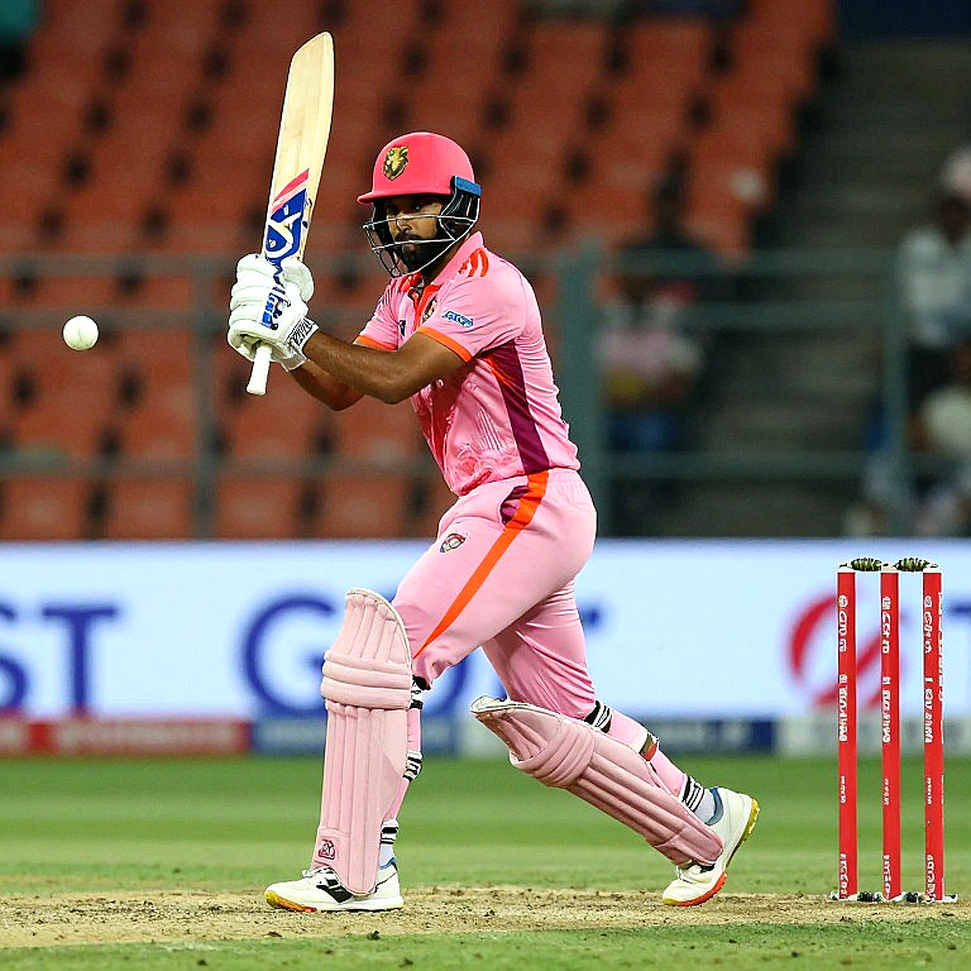
At West End Park International Cricket Stadium in Doha, Bangladesh A defeated Afghanistan A by one wicket after the last pair completed a tense chase. The final sequence was striking: Ripon Mondol took two runs, put Iqbal Hossain on strike, and Iqbal responded with a four and a six off consecutive deliveries. Yet the central lesson of the match is not the six. Bangladesh were nine wickets down at 162 while chasing 175. The victory was therefore not the product of a controlled chase. It was a survival after Bangladesh nearly surrendered the advantage created by their bowlers.
This was not a full international. It was a 50-over List A fixture between A teams in the Asia Cup Rising Stars competition. That distinction matters. The performances belong to an emerging-level context and should not be transferred directly to ODI, T20I or Test judgments. One match cannot define a player, but it can reveal how a team is currently built. Bangladesh A offered a clear split in Doha: the bowling attack looked competitive, while the batting remained fragile.
I have followed matches for years, and the final line of a scoreboard often hides the actual shape of a game. To understand this one, the first over matters as much as the last two balls. Bangladesh captain Saif Hasan fell in the opening over. Parvez Hossain then made 33, Sabbir Rahman and Mohammad Saifuddin contributed 28 each, and Shahadat Hossain scored 25. Those efforts kept the chase alive, but none of the senior batters closed the match. The responsibility eventually moved to Iqbal, a player selected primarily for his bowling.
Afghanistan A also struggled to build a complete innings. The scorecard records 174 all out and a target of 175 for Bangladesh. Ikram made 48, but the next-best score was only 19. That level of dependence on one batter restricts a team even when the bowling unit is strong. Afghanistan’s attack nearly defended a modest total, but the batting could not provide enough support to create a larger target.
Bangladesh’s bowling was the most repeatable positive from the match. Ripon Mondol took three wickets for 39 runs. Saif Hasan took two for 17, Rubel two for 21 and Iqbal two for 32. Eight wickets were shared among four bowlers. That distribution matters more than a single spectacular spell because it shows that Bangladesh did not need one bowler to carry the entire innings. On a slow or low-bounce surface, sustained pressure through cutters, spin and disciplined lengths can be more valuable than isolated pace.
The combined scoring rate also offers a clue about the conditions. Afghanistan made 174 and Bangladesh reached 176, with both innings operating around or below four runs per over. The available information is incomplete, so the pitch cannot be described with certainty. Still, the figures suggest a surface that may have been slow, two-paced and difficult for clean boundary hitting. Toss details, weather, dew, rain interruptions and any use of the Duckworth-Lewis-Stern method were not provided. Those missing facts limit how confidently the difficulty of the chase can be judged.
Bangladesh’s early setback shaped the entire innings. Once Saif Hasan departed in the first over, the batting order had to rebuild. Parvez supplied an anchor contribution, but the innings did not turn that stability into sustained acceleration. Sabbir and Saifuddin added useful runs, yet the middle and lower order could not take the chase to its natural conclusion. Reaching 162 for nine while pursuing 175 is the honest description of the innings. The result was a one-wicket win, but the process was a near-collapse.
The available data does not include balls faced, the exact overs of the dismissals, dot-ball totals or boundary percentages. Batting strike rates and detailed bowling economies therefore cannot be calculated responsibly. Even so, the score structure tells us that Bangladesh had names and experience in the order, but not enough conversion under pressure. A lineup with several internationally experienced players should be able to protect a chase of 175 more effectively. The match exposed a difference between paper depth and usable depth.
Iqbal’s four and six will naturally dominate the public narrative. His two consecutive boundaries against Farmanullah won the match. But two balls from a number eleven cannot be treated as evidence of a new batting identity. Iqbal also took two wickets, and that is the more reliable basis for assessing his value because bowling is his established role. The batting contribution was a match-winning cameo, not yet a trend. The correct question is whether he can repeat his bowling impact across several matches, not whether he has suddenly become a finisher.
For me, Ripon Mondol produced the most transferable performance. His three wickets were the best bowling return in the match, and his two runs at the end ensured that Iqbal received the strike. That contribution is less visually dramatic than a final-over six, but it combines a repeatable skill with situational awareness. A last-wicket partnership is rarely the work of one batter alone. Strike management, reading the field and anticipating the bowler’s next length all matter when the margin is one wicket.
Bangladesh should not allow the last pair to conceal the batting problem. A win is valuable, especially in a tournament group, but nine wickets falling for 162 while chasing 175 is a warning for selection and preparation. Against a stronger batting side, Bangladesh may not receive a total this modest. The top order needs a clearer plan for the first 15 overs, the middle order needs one batter capable of carrying the innings, and the lower order cannot be treated as the emergency solution every time a chase loses shape.
The presence of senior players in an emerging-level event raises another question. Sabbir Rahman and Saifuddin may be using the tournament for rehabilitation, match practice or a return pathway. The published information does not establish the purpose of their selection. Their experience can help a young group, but every senior place also reduces an opportunity for a developing player. In an event designed to prepare the next group for senior cricket, selection must balance immediate results with long-term pathway work.
That balance matters particularly for young players who mature early. A player may look ready for senior workloads before the body has completed its development. A-team cricket should provide a controlled bridge, not reproduce the full burden of international schedules without proper management. Saifuddin’s workload, in particular, should be judged through overs, batting load and recovery rather than through a single score of 28. The same principle applies to every young player whose short-term success may invite excessive use.
Afghanistan A should not be judged only by the defeat. Their bowlers created a match from a total that appeared below par. Naveed took three for 27, Nasir two for 24 and Farmanullah two for 40. Reducing Bangladesh to 162 for nine showed that the attack was capable of defending a modest score. The batting issue was narrower and more severe: Ikram made 48, but no other batter passed 19. If a second contributor had reached 30 or 40, Bangladesh’s chase might have been under far greater pressure.
Doha was a neutral venue for both sides. Bangladesh therefore did not receive the full benefit of familiar home conditions, and Afghanistan did not have a conventional home advantage either. Afghanistan’s cricket has repeatedly relied on venues outside the country, making Gulf staging a structural feature rather than a one-off arrangement. Such events require clear communication about weather, pitch conditions and match regulations. The published over counts create uncertainty: Afghanistan’s innings is recorded as ending after 45 overs, while Bangladesh’s chase is recorded as ending after 45.5 overs. If the two innings were played under different limits, the reason should be stated.
There is also a direct conflict in the reported score. One part of the source says Afghanistan were dismissed for 147, while the scorecard records 174 and a target of 175. Those figures cannot describe the same final total. The 147 figure may have been a mid-innings score or an editorial error, but it requires official reconciliation. Record-keeping is not a minor editorial detail. Scorecard errors affect statistical databases, fantasy platforms and future assessments of players. The scorecard and tournament bulletin should be corrected before this match is used for deeper analysis.
The Bangladesh A team has four points from two wins, including an eight-wicket victory over Hong Kong and this one-wicket win over Afghanistan A. Sri Lanka A also has four points, and the two teams are scheduled to meet on Monday. Bangladesh have reached the semifinal according to the available information, but the group position is still important. The Sri Lanka match is the real diagnostic test because it will show whether the batting collapse was specific to Afghanistan’s attack or part of a wider structural problem.
Three signals deserve attention in that match. First, how many Bangladesh wickets fall inside the first 15 overs. Second, whether one middle-order batter can remain until the end. Third, whether Ripon, Iqbal and the rest of the attack can again share the workload. If Bangladesh win another match after losing early wickets, the result will continue to show bowling strength mixed with batting uncertainty. If the batters produce 220 or more, the Afghanistan match may be treated as an opponent-specific failure rather than a settled pattern.
I followed the rhythm until the story showed its face. The rhythm in Doha was slow: boundaries were difficult, runs accumulated carefully and wickets kept the chase under pressure. The last pair broke that rhythm with a four and a six, but those two balls did not change the character of the whole match. Bangladesh built the game through eight shared bowling wickets and nearly lost the advantage through an unstable chase.
The dressing-room discussion should therefore focus less on Iqbal’s six and more on the score of 162 for nine. Will Bangladesh develop a reliable finishing plan, or will another last pair be asked to rescue the innings? The bowling has already offered a foundation. Against Sri Lanka A, the batting must show whether that foundation can support a genuine contender or whether this one-wicket victory was only a narrow escape.
Related Players
Recommended
Patidar's Withdrawal Reshapes India A's Plans as Rinku Becomes Vice-Captain and Badoni Gets His Opportunity2026-11-09
Zero Source, Full Framework: The Data-Integrity Crisis in Asian Cricket Analysis2026-11-02
Windhoek's 316 and a Bowling Column That Doesn't Add Up: Auditing Namibia's 2–1 Lead2026-10-28
Australia's Spin Quota: From Melbourne's Half-Space to the Turning Traps of Galle2026-09-30
Shubman Gill's ICC Player of the Month Record: The Data Fault Hiding Beneath the Label2026-10-15
BCB's First Warm-Up at a Privately Owned Ground: What the Satisfaction Note Left Unwritten2026-10-20
Pakistani Banking Story Lands in Cricket-Asia Category: Major Misclassification Caught in Analytics Pipeline2026-10-31
The BPL Auction Market: The Gap Between Price and Performance2026-10-03
Recommended
Asian Cricket's Blockchain Ledger: Fan Token Noise and the Unpaid Receipts2026-10-07
Reading the Empty Receipt: Why a Null Input Is the Most Valuable Document in Cricket Transfer Reporting2026-10-20
Karachi's 1,000 Acres and a Basket of Mangoes: The Letter Türkiye Never Wrote2026-11-05
An Empty Template in the Name of Cricket Analysis: The Failure That Spreads Silently Through Data Pipelines2026-11-03
India 52/2: The Powerplay Scoreboard, the Empty Slip, and the Ledger of a Long-Hop2026-10-26
The Empty Cell: Why the Most Dangerous Number in Cricket Analytics Isn't Zero2026-11-20
Eight Rooms, Zero Evidence: The Cricket Analysis Report That Was Full of Structure and Empty of Substance2026-10-20
The BPL Auction Market: The Gap Between Price and Performance2026-10-03