
HomeField HockeyIndia crush Singapore 7-0 to reach semi-final, but the 27 penalty corners hide the real question
India crush Singapore 7-0 to reach semi-final, but the 27 penalty corners hide the real question
সংক্ষিপ্ত উত্তর: এশিয়ান Games ২০২৬ মহিলা হকিতে ভারত সিঙ্গাপুরকে ৭-০ গোলে হারিয়ে পুল বি-তে অপরাজিত থেকে সেমিফাইনালে পৌঁছেছে। ৩০ সেপ্টেম্বর সেমিফাইনালে প্রতিপক্ষ দক্ষিণ কোরিয়া, যারা মালয়েশিয়াকে ২-১ গোলে হারিয়েছে। মূল তথ্য: ভেন্যু কাকামিগাহারা, গিফু, জাপান। গোলদাতা সুনেলিতা টোপ্পো (২), সালিমা টেটে, লালরেমসিয়ামি, রুতুজা দাদাসো পিসাল, নিক্কি প্রধান ও দীপিকা। ম্যাচে ভারত ২৭টি পেনাল্টি কর্নার পেয়ে প্রায় ৫টি গোল করেছে, রূপান্তর হার প্রায় ১৮.৫ শতাংশ, যা বিশ্বসেরা মান ২৫-৪০ শতাংশের নিচে। প্রথম কোয়ার্টার গোলশূন্য ছিল, দ্বিতীয় কোয়ার্টারে পাঁচ গোল, শেষ দুই কোয়ার্টারে মাত্র দুটি। মূল বিশ্লেষণ: ভারতের প্রায় ৭১ শতাংশ গোল পেনাল্টি কর্নার থেকে এসেছে, ফলে সেট-পিস নির্ভরতা বড় ঝুঁকি। ওপেন প্লে থেকে পরিকল্পিত গোল তৈরির প্রমাণ কম। দ্বিতীয় ড্র্যাগ ফ্লিকার না থাকা এবং গোলরক্ষক পদের সীমিত বিকল্প প্রধান কাঠামোগত দুর্বলতা। পুল পর্বের একমাত্র প্রকৃত পরীক্ষা ছিল জাপানের বিরুদ্ধে ৩-১ জয়; প্লাস ৬৩ গোল ব্যবধান প্রতিযোগিতার ভারসাম্যহীনতার কারণে অতিরঞ্জিত। সেমিফাইনালে নজর রাখার বিষয়: পেনাল্টি কর্নার রূপান্তর, প্রথম কোয়ার্টারের শুরু, ড্র্যাগ ফ্লিকারের ফিটনেস ও কার্ড, এবং বল হারানোর পর পাল্টা আক্রমণ সামলানোর ক্ষমতা। তাৎপর্য: চ্যাম্পিয়ন হলে অলিম্পিক বাছাইয়ে সরাসরি সুবিধা পাওয়ার সম্ভাবনা রয়েছে, যা প্যারিস ২০২৪-এ ব্যর্থতার পর ভারতের জন্য কৌশলগতভাবে বড়। এই বাছাইপথের আনুষ্ঠানিক Status সংশ্লিষ্ট ক্রীড়া সংস্থার প্রকাশিত নিয়মে যাচাই করা প্রয়োজন।
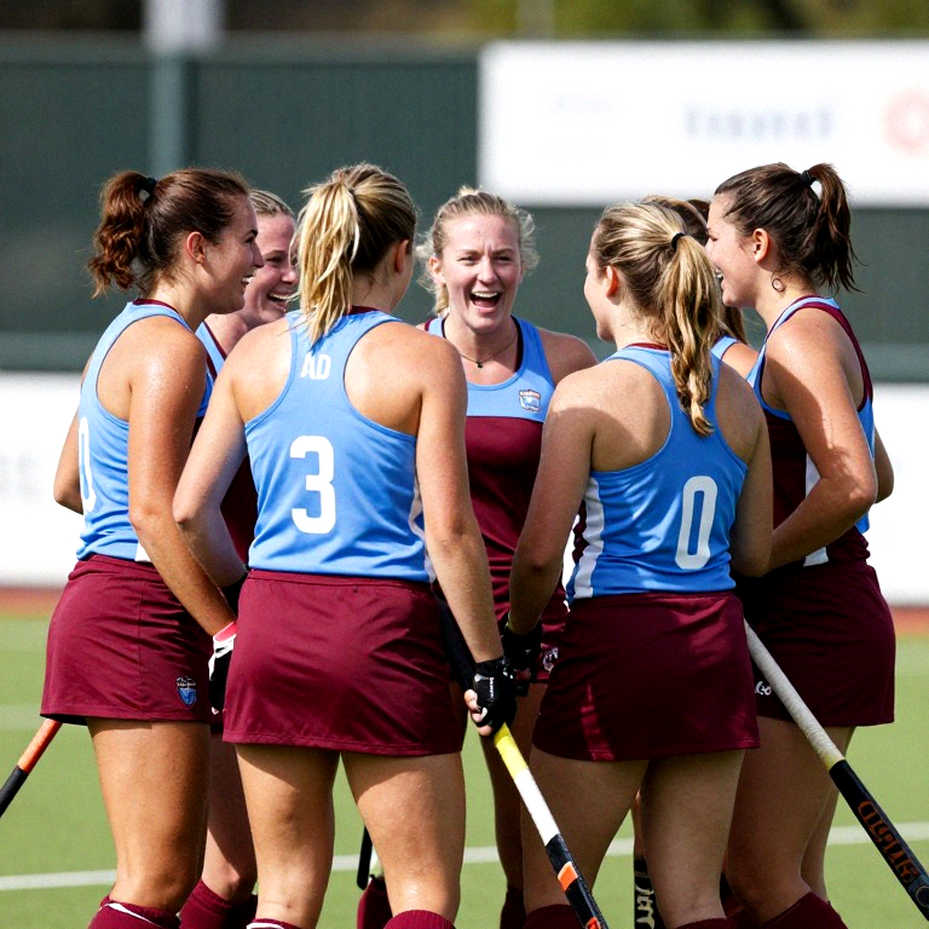
India's women's hockey team closed out its Asian Games 2026 pool campaign by dismantling an overmatched opponent. At Kakamigahara in Japan's Gifu Prefecture, India beat Singapore 7-0, completing a five-from-five record in Pool B with a goal difference of plus 63. But the numbers behind that scoreline matter far more than the scoreline itself. On 30 September, India meet South Korea in the semi-final; Korea reached the last four by beating Malaysia 2-1. The other semi-final pairs China with hosts Japan.
The match was not as straightforward as the score suggests. The first quarter ended goalless. India repeatedly entered the circle and won penalty corners but could not score. Singapore goalkeeper Felissa Lai made several saves, and a deep defensive block absorbed pressure in numbers. Then the second quarter changed everything: five goals in fifteen minutes gave India complete control. Across the third and fourth quarters, however, only two more goals arrived — precisely the kind of drop-off that becomes expensive against stronger opposition.
The scorer list is India's clearest positive. Sunelita Toppo scored twice, with further goals from captain Salima Tete, Lalremsiami, Rutuja Dadaso Pisal, Nikki Pradhan and Deepika. Seven different scorers in one match means the attack is not dependent on a single finisher — a real asset under rolling substitution. Bench players also contributed to the build-up, notably Baljeet's recovery and Nikki Pradhan's finish in the second quarter.
The first goal carried its own significance. India had been frustrated for seventeen minutes before Salima Tete converted a rebound. A captain scoring at the moment of maximum frustration is not merely a scoreboard entry; it is evidence of a settled, functioning leadership group. The attack found its rhythm immediately afterwards and the second quarter became a rout.
The most discussed number, though, is not the goals but the penalty corners. India won 27 corners and converted roughly five — a rate of about 18.5 per cent. World-class penalty corner units convert at roughly 25 to 40 per cent, and that rate is what decides matches against strong defences. Winning 27 corners against the weakest defensive side in the pool and still converting under 20 per cent cannot be dismissed as a one-off.
Roughly five of India's seven goals originated from penalty corner sequences — rebounds, scrambles, deflections, or one clean drag flick — meaning about 71 per cent of the scoring depended on the set piece. Against Korea or China, India may win only six to eight corners rather than 27. At the same conversion rate, the expected penalty corner yield falls to roughly one to one-and-a-half goals — not enough to win a knockout match unless the open-play route opens up.
Whether India can create in open play remains unanswered. Of the two non-penalty-corner goals, one came from a rebound off a saved cross and the other from a defensive error. Neither was a constructed chance from flank penetration or central combination. There was no systematic evidence of clean circle entries created through open play.
Singapore's approach was clear and familiar: retreat behind the ball, protect the circle, concede territory and penalty corners rather than clean chances, then counter when possible. This low block caused India genuine problems in the first quarter. South Korea is likely to use a similar structure, which makes India's first-quarter stalemate usable intelligence for the opponent.
One notable detail: in the second minute India won a penalty corner after a successful video referral. Video referrals are usually used to overturn defensive decisions, but India deployed it as an attacking tool. That reflects drilled competence in the rules, not just physical preparation, and could matter in a tight knockout match.
The goalless first quarter and the two-goal output across the final thirty minutes together sketch a familiar risk: slow starts and fading momentum. Both are expensive against stronger opponents. India also wasted a large number of corners in the third and fourth quarters, with saves and first-runner clearances accounting for much of it.
Still, squad depth cannot be discounted. Seven scorers, meaningful bench contributions and the involvement of young forwards all point the right way. Sunelita Toppo's near-post deflections and Lalremsiami's stick deflections suggest the coaching staff has deliberately built multiple deflection routines — a planned tactical investment that reduces the load on the direct drag flick.
The information deficit is itself a finding. No possession, shot, circle-entry or save statistics were reported for a continental championship match, which reflects the low data-reporting maturity of the Asian Games hockey competition. Any statistical model built on this match would be unreliable; the analysis must rest on a limited set of numbers.
The semi-final opponent deserves separate consideration. Korea beat Malaysia 2-1, meaning they arrive match-hardened by a competitive fixture. Four of India's five pool matches were against sub-elite opposition. The result is a classic configuration: an under-tested favourite against a battle-tested underdog. In knockout hockey, that difference frequently decides outcomes.
India's only genuine test in the pool was the 3-1 win over hosts Japan, and that result — not the plus 63 — is the real benchmark. The goal difference is largely an artefact of draw structure; heavy wins over Uzbekistan, Indonesia, Thailand and Singapore say more about competitive imbalance than about Indian strength. Japan's progress to the other semi-final validates the 3-1 win as a marker of real quality.
External factors matter too. Gifu has seen a second consecutive overcast, rainy day, and rain alters ball speed and surface grip on water-based turf. Late September falls within Japan's typhoon season, so postponement or schedule compression remains a live risk even if nothing has yet occurred.
Then there is the larger context the match report does not address. The Asian Games hockey champion is understood to be the designated continental qualification route for the LA 2028 Olympic Games. The Indian women's team previously failed to qualify directly for Paris 2026 and could not negotiate the Olympic Qualifying Tournament. Against that background, this semi-final is not merely a match; it is a question about the stability of planning and funding for the next Olympic cycle. The precise status of that qualification pathway should be verified against the published regulations of the relevant federation.
The biggest structural risk is the absence of a second drag flicker. Deepika is the designated penalty corner specialist, and roughly 71 per cent of the attack stands on that platform. If she is carded, injured, or effectively man-marked in a knockout match, the attack loses its organising principle. The risk exists before the match and no clear alternative has yet been established.
The goalkeeper position carries a similar profile. Bichu Devi has consolidated the number one role, but building a successor is multi-year work for a top-ten nation, and a large win can mask that vulnerability.
Counter-attacking exposure also surfaced. After a turnover, Singapore's Qian Xiao Kwek found herself clean through against the goalkeeper but failed to convert. Creating such a chance against the weakest opponent suggests a larger problem against stronger ones. Because the penalty corner attack commits players forward, rest-defence discipline requires separate planning.
There is no card information in the report. A match featuring 27 conceded corners involves repeated foot blocks in the circle, which under stricter officiating could escalate into cards. Discipline therefore cannot be assessed; this is a genuine information gap with knock-on effects for the knockout risk model.
On the positive side, the ability to restructure at the quarter break has been demonstrated. Going from a goalless first quarter to five goals in the second shows the staff can read a match and use the format's windows. But that is reactive problem-solving rather than pre-planned design, and Korea will have the same windows.
The generational transition is clearly underway. Sunelita Toppo, Rutuja Pisal and Ishika are taking meaningful minutes and scoring at a continental tournament, which builds the foundation for the next Olympic cycle. The Ishika–Salima combination, Navneet's involvement and bench contributions all indicate balanced squad management.
On funding: the Odisha state government's title sponsorship is the principal financial pillar of Indian hockey. It allows international-standard preparation but also creates single-anchor dependency. There is no professional or franchise league in Indian women's hockey, so players' income and visibility depend largely on national camps and government employment. In that reality, an Asian Games run generates a burst of attention but not a durable commercial structure.
The gap between media expectation and reality is also visible. The 7-0 scoreline and the plus 63 goal difference are being framed as dominance, while the goalless first quarter, roughly 22 wasted corners and the conceded one-on-one barely appear. The report does not discuss Korea's quality or China's presence. That asymmetry can inflate expectations, producing disproportionate reaction if the semi-final goes wrong.
What to watch is clear. First, penalty corner conversion: five or more corners against Korea with a rate still below 20 per cent would confirm a structural problem rather than an anomaly. Second, the first quarter: another goalless or trailing start would confirm slow-start vulnerability. Third, the drag flicker's availability and workload. Fourth, the card count, especially for core defenders and the corner battery. Fifth, the number of turnovers in the attacking half that allow the opponent to enter the circle.
Overall, this win is a display of talent, not a test passed. India's true strength remains unproven, because the only real examination in the pool was the 3-1 win over Japan — a result showing India are clearly ahead of Asia's second tier, but not by a wide margin. Nothing here proves the gap to China has narrowed.
The semi-final will answer two questions. Can India score without penalty corners? And can a young side hold together under pressure? If the first answer is no, beating Korea becomes very difficult. If it is yes, this team establishes itself not only at the Asian Games but as a genuine contender in the next Olympic cycle.

Related Players
Recommended
The Void in Hockey Analysis: In Search of a New Framework2026-10-22
Behind the 33-20 Scoreline: A Technical Audit of Bangladesh Women's Handball Attack Structure2026-10-19
India 3-1 Japan in Kakamigahara: Where the 56-Goal Picture Shows a Gap2026-09-25
Not an Invitation but a Diagnosis: What the Asian Champions Trophy Reveals About Bangladesh Hockey's Body2026-10-14
That Door at Surjit Singh Stadium: Harmanpreet's Father, a Montage, and Bangladesh's Missing League2026-10-29
No Score, No Names, Only Highlights: 'Battle of Queens 2026' at the Deep Base of Hockey2026-10-08
Punjab's Slot, Dhaka's Ledger: The Real Arithmetic Behind Bangladesh's Entry into the Asian Champions Trophy2026-10-18
One Line in Thirty-Five: The Asian Games, Hockey and a Single Olympic Sum2026-09-25
Recommended
India vs Pakistan Hockey Semi-final: Where the 49 Pool Goals Mislead, and Where the Penalty Corner Decides2026-10-01
Three Goals in Three Minutes: Bangladesh's Real Defeat Came in the Third Quarter2026-09-29
Five Matches in Seven Days, One Camp: At the Asian Champions Trophy, Bangladesh's Real Opponent Is the Calendar2026-10-23
Sixteen Names, An Eighteen-Man Squad: Bangladesh's Real Arithmetic at the Asian Champions Trophy2026-10-19
Two Drag Flicks, One Blank Address: The Ledger Before the India–Pakistan Semi-Final2026-10-20
The Second Minute in Gifu: Women's Hockey's First Point and a Ledger That Still Won't Close2026-09-26
India 3-1 Japan in Kakamigahara: Where the 56-Goal Picture Shows a Gap2026-09-25
Seven Days, Twenty-Seven Years of Deficit: The Arithmetic of Pakistan Hockey's Goalkeeping Fix2026-10-17